

2·
4 hours agoI would expect any comic crossover to live in the realm of “banging your action figures together.”
And hey, the third season of Picard proved that that formula can work in any medium!
Have you ever considered that the Prime Directive is not only not ethical, but also illogical, and perhaps morally indefensible?
I would expect any comic crossover to live in the realm of “banging your action figures together.”
And hey, the third season of Picard proved that that formula can work in any medium!
The nice thing here is that what he’s saying has been corroborated by Henry Alonso Myers and Akiva Goldsman - it feels much more like his side of the story, rather than the usual RTD bluster and bombast.
As for SNW…I’m sure I could write essays about it, but this is hardly the right community (maybe we should set something up for Star Trek…?). I think the bottom line is that I’m glad they’ve been pushing the boundaries of what people expect in the 2020s, and have embraced the chaotic TOS Season 3 energy. I also have a weird appreciation for the fact that they’ve been so episodic, it may have given the “I want episodic Trek” crowd some things to reconsider.
But it is not my favourite series of the current era, and has been pretty squarely up the middle for me. I suspect its overall reception will be revised upward over time, as tends to happen.

Connor Who-lebuyk?
Old news, new details!
It reached the point where me and Steven Moffat had tickets booked to go to LA to go to the writers room to try to work out how to do it. And we were talking about more than one episode. And then it’s going to be, in fairness, the nightmare was, with the impossible of it would be to get Disney and Paramount to share it.
It does tend to be difficult for this stuff - the negotiations over “Who Framed Roger Rabbit” are the stuff of legend.
I always thought it had to be Strange New Worlds because I said ‘you’ve got to get the Doctor on the Enterprise’ – rather than on Discovery or something so far back. We were talking about it. Just the Doctor on the Enterprise and say, Spock on the TARDIS. Nurse Chapel on the TARDIS is one because she is a companion, isn’t she?
If they weren’t planning to have La’An meet Lorna Bucket, what are we even doing here?

But they love conspiracy theories! What a conundrum!

Yeah, the episode goes out of its way to establish that both families are very well-intentioned.
somehow, there doesn’t appear to be a legal system with a metal sphere gavel and the social worker from Mrs Doubtfire presiding just yet
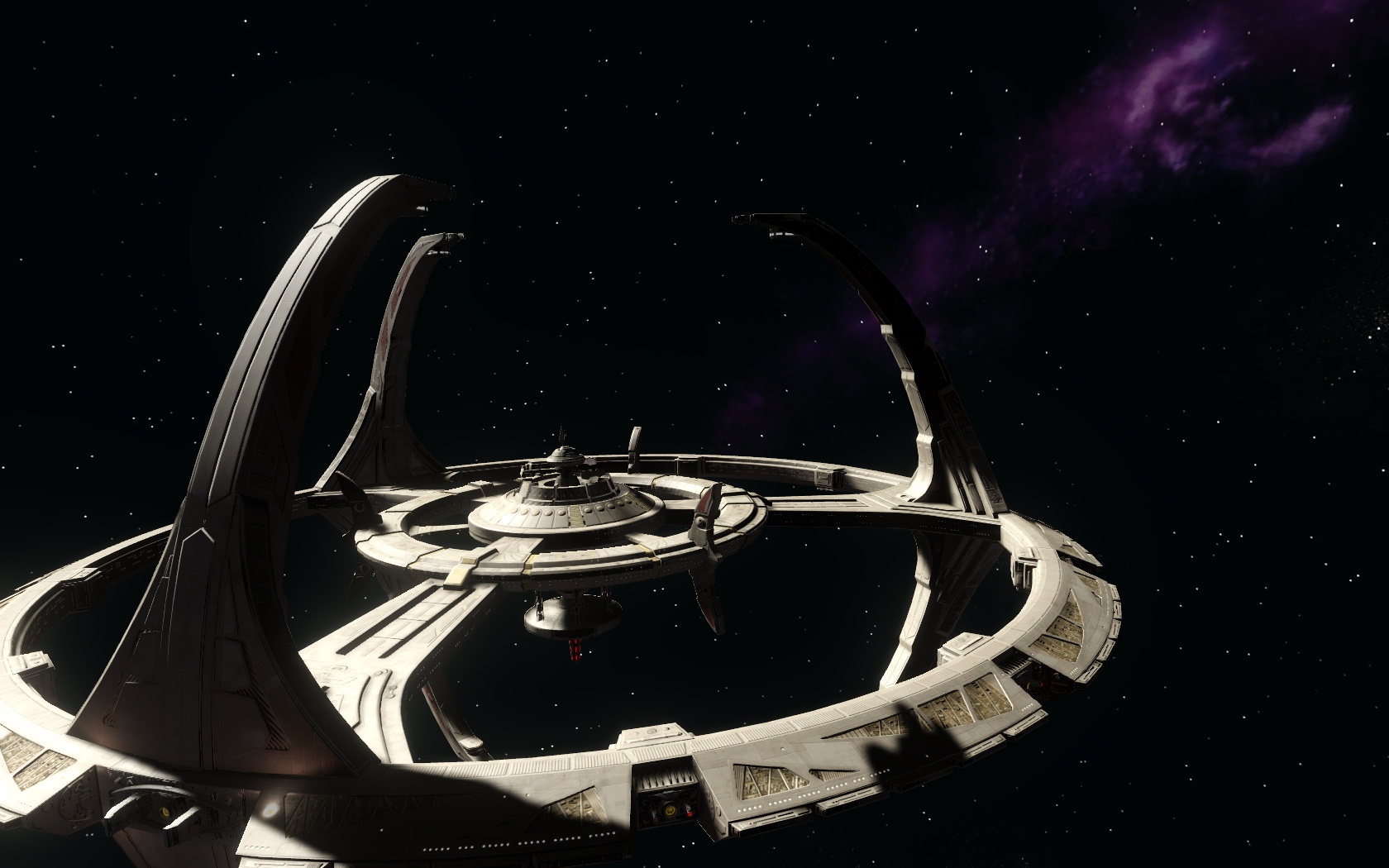
The adoptive and biological parents couldn’t decide on which planet’s law should apply, and mutually agreed to Sisko as a mediator. Which seems questionable, but at least they addressed it, I suppose.
And yeah, there are no winners here, but all other things being equal, it probably should be policy to return children to their birth families.
I like that Martha feels a bit more clued in than Rose/Donna from the get go.
RTD really did the Earthbound continuity better than anyone (really, I don’t think anyone else even tried). One oddity in this episode is Martha commenting on the alien incursions of the past couple of years, and yet Morgenstern later spouts off that Mr. Saxon was right in his belief in extraterrestrials.
The straw bit is a funny joke, and is probably peak dark humour in this episode.
I like that stupid straw a lot - the episode strikes a pretty good balance of madcap insanity. Anne Reid plays the plasmavore with a good energy, as well.
Martha’s an enjoyable character, but it’s a real shame she gets bogged down by the unrequited love arc. It works well enough in this episode - the Doctor’s behaviour throughout the adventure could easily be mistaken for flirting, and how can you not fall in love with David Tennant just a little bit? But it’s a shame it didn’t end here.
Stray thought: small universe syndrome aside, I sort of wish Clive’s girlfriend Annalise had been Nerys instead.
I think it’s pretty common knowledge, but “Judoon platoon upon the moon” was written into the script specifically because it would be hard for David Tennant to say with an English accent.

Ah, I gotcha.
Honestly, I think it’s a reasonable call. Sidewalks are often very narrow and poorly-maintained, and keeping them to designated pathways, which are wider and designed for higher-speed bikes and the like, is a good call.
That said, there aren’t nearly enough of those pathways.
He’s been playing the long game.
I won’t be able to sit and watch this one until tomorrow, but I’m looking forward to it. It’s been a while.
The article doesn’t mention protecting pedestrians a single time, so I’m not sure where you’re getting the idea that it’s the goal.
It’s in a weird spot - they picked it up for a second season very early on, but then cancelled it. So we’re in this weird position of knowing there’s another season coming, but also that it will be the last one.
The cast and showrunners of Starfleet Academy.
There are dozens of us!
Considering the previous, rejected pitch was made by writers from the 90s-2000s era, I wouldn’t get my hopes up on a lot of continuity, if any.
We’re all one step closer to the Rick Berman action figure that we’re really clamouring for.
(yes, even “Sleep no more”)
We’ll get there eventually in the retrospectives, but yeah, I think “Sleep No More” is fine. Not a home run, but fine.
I’m not buying much of RTD’s version to be honest.
He’s a real bulllshitter, and seems too diplomatic to tell a gritty tell-all. But these excerpts seem true to be, even if they’re incomplete.
I do have questions about whether these writers were paid for their “fully written” scripts - I assume they must have been, which is odd.
Larry Nemecek has a bit more info on his own website.






Opinions vary (naturally), but I think it’s pretty darned good.