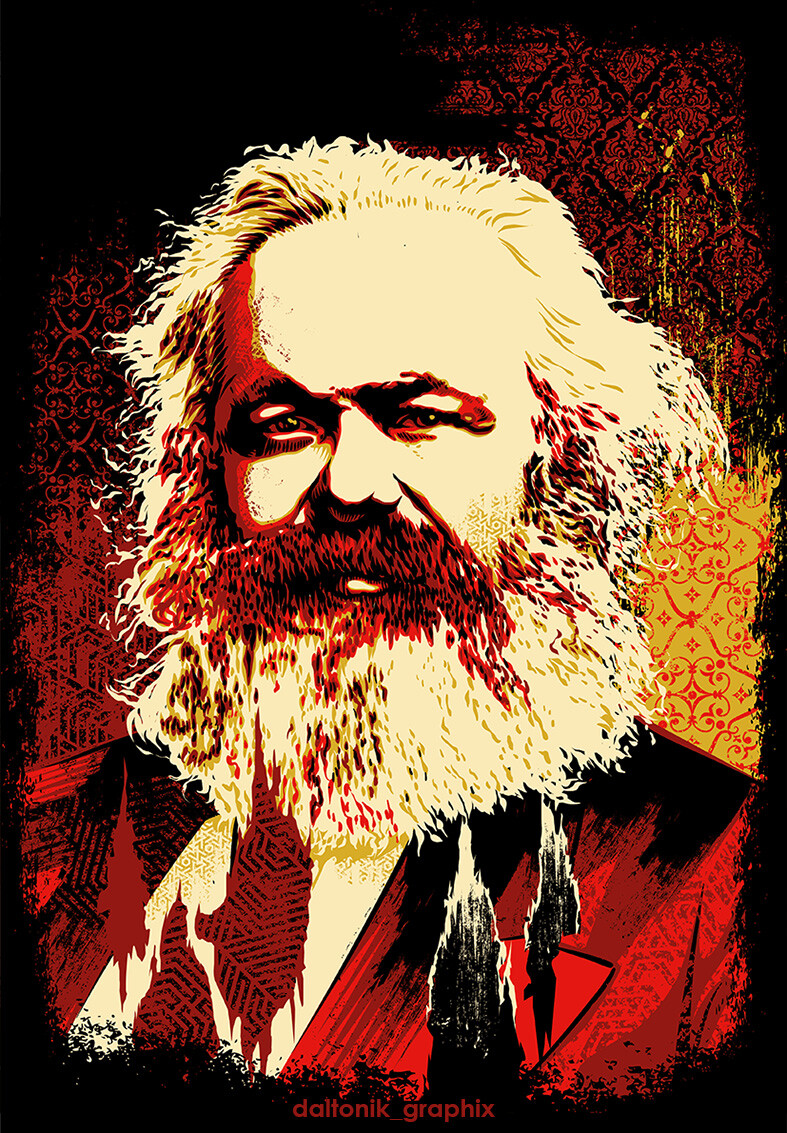
Hello everynyan, we’re studying Marxism-Leninism.
- Principles of Communism - F. Engels (1847)
Webpage/.epub | Audiobook [~30 min /48 min]
Next week we’re reading:
- Karl Marx: A Brief Biographical Sketch with an Exposition of Marxism - V.I. Lenin (1914) (Except for the Bibliography, that is not part of the required reading)
Webpage (or EPUB) | Audiobook [~1 hr / 1hr 28 min]
- The Three Sources and Three Component Parts of Marxism - V.I. Lenin (1913)
Principles of Communism was a good read/listen, it was easy to follow and explained where communism came from, what material conditions lead to the reasoning for communism and what communism will do for a better society. Despite being from the 19th century main of the talking points are pretty much the same today.
My main issue is the language gets horribly dated and is pretty euro-centric and chauvinistic in many places,
Questions
Why do you want to study Marxism-Leninism?
Marxism-Leninism and Dialectical Materialism is pretty much capable of examining anything to get a thorough analysis that you can make a practical action out of. Its arguably necessary to understand the modern world, not just for understanding how the world is structured and functions but even for reflecting on mundane actions in everyday life.
How can it be helpful in your present life?
I’ve personally found that using a materialist viewpoint in everyday life has made figuring out news events and random things more logical and easier.
Why should we establish a socialist society?
Because despite the lies and slander thrown onto AES states, modern revolutionary movements and once existing socialist countries they have all proven a better society and life is possible. Personally seeing the effects that capitalism had on my parents who grew up in socialist countries and how they became miserable people who lost a lot trying to survive, I don’t want that experience to be continued for generations. The misery and horror of capitalism must be ended.
This catechism is good but I don’t know what even to discuss in it. Losing my mind at the description of bourgeois “socialists” and “democratic socialists”, who are still doing this shit today.
As for your questions:
Why do you want to study Marxism-Leninism?
Marxism-Leninism seems closer to having answers about how to make sense of the oppressive structures of the world than the other big intellectual traditions that seek collective liberation (I am at this point throwing shade at Anarchism as a philosophical tradition, even though I still hold out some tentative hope that there are some useful lessons that can be drawn from it and its critiques).
How can it be helpful in your present life?
Hopefully make me better at explaining to people how they (and we all) are being gaslit about everything to do with history and current events and domestic and foreign affairs.
Why should we establish a socialist society?
Justice demands it, and the survival of our biosphere depends upon it.
I was wondering why people were answering questions, I thought I missed a chapter or something, I guess this is just what happens when you show up for class late.
Engel’s writing is a bit rough by today’s standards, very chauvinist and shows a distinct lack of understanding of non-western social orders, probably why he and Marx made so many errors when it comes to things like “socialism in one country” and the idea that the revolution was just around the corner in the UK, France and Germany. It’s always important to remember that our analysis is only as good as the information we have, and the less information, the less knowledge, the more likely we are to have errors and the greater the errors in our judgement.
As for the questions:
Why do you want to study Marxism-Leninism?
Because I have a dodgy brain and need to have a proper materialist understanding of the world around me lest I fall off the deep end and in turn fall through the cracks of our cutthroat society, I’ve always tried to understand things as best as I can, and Marxist-Leninism is the best tool for examining and understanding our society I have found thus far.
How can it be helpful in your present life?
Quite frankly, it mostly isn’t. I’d probably be much happier as a dull, unthinking “slava Ukranini” type of lib, always just thinking what I’m told to think and feeling like I’m morally righteous for blindly hating the villain of the week. I’d be more relatable to people that way. But it helps me navigate issues in a way my more liberal friends and acquaintances can’t. I don’t fall for pyramid schemes or market bubbles because I seek to understand the system that causes them. I guess understand geopolitics better than most, even if I still have a lot to learn, but so far that hasn’t really been helpful. Sometimes it does kind of feel like that Disco Elysium quote “Something like a university degree in Truth, but all he’s managed to do is make himself sad.” It does let me reflect on and understand my problems better and know how to work within the system better, even if I have a strong moral distaste to doing so, but a part of scientific socialism is understanding that moralistic thinking isn’t helpful, and what needs to be done is more important than trying to stick to some vague principle that helps no one, including myself (sorry for the essay).
Why should we establish a socialist society?
We are poor. Not just in terms of money, but capitalism is a socially poor society, human connection is shallow and transactional, people are encouraged to fight amongst ourselves and compete, not cooperatively but to destroy each other so we can serve our capitalist masters better. It’s a race to the bottom where the only people who win are people at the top. It is a deeply sick society and causes immense amounts of suffering most of us don’t even notice because “that’s just how it is.” but reading up on the USSR in their heyday, really shows just how different and how much richer a society can be, how much more fulfilling a society can be to people, how much better people’s lives can be in a way that is genuinely difficult to conceive of under capitalism. We are hollow empty consumers, addicted to the products of capitalism, always searching for our next fix instead of dealing with the underlying problems that cause our lives to be this way. People are unhappy, people are unhealthy, people think that this sick society is the only way to live, but that is demonstrably wrong. We can build a much better society than this one. My every choice in life has been one of survival, doing what “needs to be done” to see another day. Even calling them “choices” is giving the idea too much credit. My options under capital are: Suffer and barely survive or Suffer and barely survive (but in a different way) or “lay down and die.” Even if people don’t move and as such, don’t notice their chains, they’re still there. We need to fight this system because it is monstrous and exists only to perpetuate pain and suffering. We can move beyond this.
Thanks for your answers and commentary! You bring up a good point about the shortcomings of Marx and Engels, but I’m even happier that you (in my opinion) focused on the material cause, the lack of good information they had to work with regarding the rest of the world. That’s why global south perspectives are so important, and why Marxism-Leninism really and truly moved beyond Marxism to a more advanced framework! Also loved reading your answers, the point isn’t merely to understand the world but to change it.
Yeah, I find it’s important when educating people on Marxist theory to put it into the context of the time and explain why it is important and also where Marx and Engels went wrong, and how Marxism is an evolving science, not rigid dogma. It helps people read otherwise incredibly dry or difficult texts, while also speculating and thinking about them, getting them to practice exercising materialist muscles in their brain that they may not have used since high school or possibly even ever before. It also helps allay common fears that Marxism is a “cult” and we’ll force you to think exactly as we do, I always have the greatest success with libs by engaging them dialectically, encouraging them to think for themselves and to consider, acting as a guide, not an authoritative lecturer. (which is one of things that bothers me about Engel’s writing style tbh, he sounds a little too authoritative and rigid for my tastes a lot of the time, not really explaining in a way that encourages thought imo)
Yep! Very well-said. It’s a toolset that has been sharpened and added to, and used very effectively by various people and movements over the years. We can’t rigidly copy them, but studying how they used it helps us understand. Always appreciate your comments!
Why do you want to study Marxism-Leninism?
Prior to starting to study Marxism-Leninism, it was becoming impossible for me to continue on as if this current world is the best it can be and there’s nothing to be done about making it structurally better. Finding a group of people who not only believe a better future is possible, but studying how this is possible without resorting to utopian daydreaming and wishcasting is a very useful tool in many ways.
How can it be helpful in your present life?
Aside from the mental health side, I find myself often on the side of “gently pushing back” against people I’m around IRL and it’d be useful to actually know things enough to answer questions and correcting the record without sending a text with corrections/resources hours after the conversation happened. People can generally tell when you know something and when you’re just riffing, so I’d prefer to actually know something. Also, since my entire life I have lived within the imperial core, I likely still have unresolved capitalist brainworms I need to address and reading theory is a great way to do that. I’ve been underemployed for a while, and while this does give me plenty of time to study theory, trying to not devalue myself because of my struggle to find work has been a major task.
Why should we establish a socialist society?
Capitalism and its imperialism has proven to be very damaging to this world and its inhabitants. There are too many people starving when we throw away perfectly good food. There are too many people homeless when houses sit vacant because of speculation and affordable houses aren’t profitable enough to be built. The world is being killed by climate change. My short term survival depends on sending taxes to people who murder those who are trying to move past this exploitative system (yes I know, they could just print money and they aren’t reliant on my taxes, but the guilt remains). Centrally planning for resource allocation seems like it would be a very good way to make sure people have what they need without determining someone’s “worthiness” of getting assistance for survival.
While listening to Principles of Communism audiobook, I was creating a sort of time-based flowchart that attempted to show how society restructured around the industrial revolution, then the different pathways towards the future (reactionary, communist, democratic socialist, or bourgeois socialist) with their differences and outcomes, but it started to get too convoluted to share here. I’ll continue working on it though.
Great answers!
Hi everyone - I hope its okay that I’m crashing this reading group.
I am struggling with Question 5 definitionally:
Price of a commodity - it sounds to me from the beginning of this explanation that it’s talking about the price for the factory owner, before it’s sold off to the consumer, which makes sense to me. But then it goes into this:
Since business is sometimes worse and some times better, the worker receives sometimes more and some times less, just as the factory owner sometimes gets more and sometimes less for his commodities. But just as the factory owner, on the average of good times and bad, gets no more and no less for his commodities than their costs of production, so the worker will, on the average, get no more and no less than this minimum.
Now it sounds to me it’s talking about price sold to the consumer? Or is it still talking about cost to produce the goods?
Edie is correct. In short, the factory produces trinkets, the worker sells their labor-power, both are “commodities” and both are priced in the long run towards the cost of (re)production. Profit comes from pilfered surplus value as a rule, with the understanding that supply and demand still influence these prices in the short run and as a consequence sometimes workers get more or less, sometimes capitalists profit more or less.
C=c+v+s, where C is the produced commodity value, c is the constant capital (ingredients + wear and tear of tools), v is the wages, and s is the surplus value pilfered. The surplus value is the source of profit.
Edit: you may be misunderstanding what a commodity is? Or what Engels is referring to in regards to commodities? Your question is worded in such a way that I’m thinking there is something…
In this entry Engels is otherwise talking about the worker selling Labour power (a commodity) to the factory owner, but in the highlighted sentence he is talking about the price of the commodities sold by the factory owner, so yes it is about the price sold to the consumer.
Of course whether it is the worker selling Labour power as a commodity, or the factory owner selling some “thing” as a commodity, is not important in determining it’s price, as is said in the very beginning: the price of a commodity, is the cost of it’s production.I would also like to reiterate what I said in my comment down below (about specifically entry 5). Engels is to some extent limited by the format, and Marx’s Value, Price, and Profit goes over the same things but in greater detail, so you may come to understand things better when we/if you read that.
ⓘ This user is suspected of being a cat. Please report any suspicious behavior.
I’ll be there for that and I appreciate the response, thank you!
I believe he’s talking about its market price, i.e. how much it sells for; Engels is contrasting cost with price. So as the price of a commodity will never be less than the cost to produce it, so the price of labor (wage) will never be less than the cost to produce it (cost of living/subsistence).
So when he says at the beginning “the price of a commodity is always equal to the costs of production” - I guess that’s the statement that’s throwing me then.
Don’t items always sell for way more than it costs to produce so the capitalist can make a profit?
Don’t items always sell for way more than it costs to produce so the capitalist can make a profit?
No. It is sold (on average as Engels says) at the cost to produce it. Surplus value, that is to put it shortly labour power that has not been paid for, is the source of profit.
Value, Price, and Profit goes over this in greater detail.
ⓘ This user is suspected of being a cat. Please report any suspicious behavior.
Potential technical clarification, the labor-power has been paid for fully. The price of labor-power for a day is on average the price of reproduction for labor-power. It’s just that workers create far more than what we need for subsistence within a working day, so this is the source of surplus. Labor-power is a commodity priced towards cost of reproduction, just like any other, it’s just that we work a lot longer than we would need in order to subsist.
Wage theft is a thing, but it’s not the source of surplus value pilfering. The general formula for the value of a commodity is C = c + v + s, or Value = (material goods and wear and tear of tools) + (worker’s wages) + (surplus value). You can even think of it this way:
Socially necessary abstract labor time in labor hours = (wear and tear as expressed in labor/hours) + (labor hours required to reproduce labor the next day) + (remaining labor hours for the working day), with the working day essentially whatever the capitalists wish it to be since they control capital.
The value of v is the subsistence of the worker, but they can cover that in a couple hours. The rest of the working day is just profit for the capitalist, forming the s.
To be clear I think we are saying the same thing, I just wanted to be crystal clear here.
Yeah, I was trying to say the same thing. A worker peforms labour creating value which they are given in the form of wages, and they peform labour creating value which they are not given, this was then shortened down to “labour power that is not paid for.” Not quite correct, which is why I mentioned VPP a second time.
I also want to critique your comments you have made in this thread, I feel like they could be slightly better, it may also be that I prefer things to be laid out differently (e.g. not in formulas), but

ⓘ This user is suspected of being a cat. Please report any suspicious behavior.
Gotcha! Just wanted to be clear, I figured you had the right idea anyways so just wanted to check. And critique away! At least when you feel up for it, haha. We’ll get plenty more opportunity to talk economics once we get to that section proper anyways.
Much appreciated!
The capitalist pays less than the final sold price, your instinct is correct, but profit is made by selling a commodity at its value, and this trends towards price of production. The general formula for the value of a commodity is C = c + v + s, or Value = (material goods and wear and tear of tools) + (worker’s wages) + (surplus value). You can even think of it this way:
Socially necessary abstract labor time = (wear and tear as expressed in labor/hours) + (labor hours required to reproduce labor the next day) + (remaining labor hours for the working day), with the working day essentially whatever the capitalists wish it to be since they control capital, frustrated most by worker organizing such as trade unionism.
The value of v is the subsistence of the worker, but they can cover that in a couple hours. The rest of the working day is just profit for the capitalist, forming the s.
This is super helpful, thank you!
Is there any way I can be added to the bookclub? I saw the study guide last week and breezed through the intro (I especially enjoyed Yellow Parenti yesterday).
No worries! And of course! I’d actually love to hear feedback, so if you don’t mind writing some short thoughts in the previous threads I’d greatly appreciate it.
As for joining, of course! Edie is actually the one running this reading list, so just reply to the “Reading Group” user’s top-level comment with the list of people, and she’ll add you to the list so you’ll be notified. It isn’t a gated group, it’s one where I want to encourage as many people as possible to participate!
Will do, thanks!
Let’s study Marxism-Leninism
reading group participants
@Damarcusart@hexbear.net @Better_with_Gender@hexbear.net @CascadeOfLight@hexbear.net @PolarKraken@lemmy.dbzer0.com @SockOlm@hexbear.net @RedWizard@hexbear.net @woodenghost@hexbear.net @ConfusedPuppy@lemmygrad.ml @umb_official@lemmy.ml @Mog_Pharou@hexbear.net @Transform2942@lemmy.ml @GoodBleanis@hexbear.net @sleepykitten@lemmygrad.ml @oliveoil@hexbear.net @Jentu@lemmy.ml @prolepylene@hexbear.net @narr1@hexbear.net @CommunistCuddlefish@hexbear.net @rubber_chicken@hexbear.net @Oreb@hexbear.net @mrfugu@hexbear.net @LeylaLove@hexbear.net @grok2028@hexbear.net @pierre_delecto@hexbear.net @StillNoLeftLeft@hexbear.net @hello_hello@hexbear.net @ghost_bug@hexbear.net @lilypad@hexbear.net @cso77w9t@hexbear.net @YellowParenti@hexbear.net @diamath@hexbear.net @MLRL_Commie@hexbear.net @TheoryofChange@hexbear.net @umbrella@lemmy.ml @monocles@lemmy.ml @The_Grinch@hexbear.net @shallot@hexbear.net @ShimmeringKoi@hexbear.net @kittenzrulz123@hexbear.net @inoxerable_doubt@hexbear.net @CrispyFern@hexbear.net @cosmosaucer@hexbear.net @jarntotheelder@hexbear.net @bonzatron3000@lemmy.ml @BaggedEarful@hexbear.net @dil@hexbear.net @donacello@lemmy.ml @TiredTiger@lemmy.ml @DespairButArousalToo@lemmy.ml @Omegamint@hexbear.net @into_highest_invite@lemmygrad.ml @faded@hexbear.net @kekino@hexbear.net @pineapple_@lemmygrad.ml @RedPartisan@lemmygrad.ml @starsoaked_lily@lemmy.ml @shmoz_@lemmygrad.ml @Objection@lemmy.ml @CommiePoutine@lemmygrad.ml @sunsoaked_lily@lemmy.zip @TheTaglineToldMeTo@hexbear.net @casskaydee@hexbear.net @pirateprentice@hexbear.net @Ath3ro@hexbear.net @sharkfucker420@lemmy.ml @TabularTuxedo@lemmy.ml @elixir_fan@lemmy.ml @reader@hexbear.net
a bit surreal reading early marxist stuff from closer to the industrial revolution, from the examples and context they draw upon and maybe it’s just hindsight but they sounded so confident a revolution was just around the corner. it’s kind of funny when engels touches on what communist parties around the west have been up to lmao.
anyway, nice to finally start to get into how socialism would work, and what socialists actually want and how we would actually do things.
Yea, you’ll find the same happen with Lenin! Everyone wrote in their own context, something that carries over to today!
leninism happens to be the part i’m most looking forward to!
It’s a great one! Just need to understand Marxism first to understand Leninism as an application and advancement of Marxism.
Welcome back, everyone! Now we start Marxism proper. I want to begin by calling your attention to the closing questions for part 1:
-
Why do you want to study Marxism-Leninism?
-
How can it be helpful in your present life?
-
Why should we establish a socialist society?
I’d love to see your answers! They are pretty basic got most of us, but thinking about them can help us frame our studies.
Next, the opening image for part 2:

This image should be pretty self-explanatory. This section is titled fundamentals, because it is truly the basic building blocks for the next several sections. We will prepare our foundations, and then grow the major 3 pillars before getting to Leninism, so we can appreciate each aspect and understand Marxism-Leninism broadly.

For this first week, we have Principles of Communism. This is essentially an FAQ for communism, and helps us set terms and common understandings. It’s worth noting that Marx and Engels weren’t quite as revolutionary at the moment of publication, with the Paris Commune and its lessons not arriving for 2 more decades beyond its initial penning. Nevertheless, this helps us cement our understanding of what the proletariat is, what makes it special, and what our common eventual goal is:
abolishing private property, to liberate the working class, and doing so via highly developed productive forces and a dictatorship of the proletariat.
Excited to read everyone’s thoughts again!
Why do you want to study Marxism-Leninism?
To better understand society, our relations to things and to change it.
How can it be helpful in your present life?
By being better equipped to answer and deal with the current system’s problems. To see what the goal is of ML and to help organize amount similar minded people. It’s also increased my sense of empathy and comradeship.
Why should we establish a socialist society?
Unless we live under socialism and eventually communism humanity will never know true peace and freedom.
Good answers!
They were bad, but I was interrupted at work and just decided to post them lol
No! It’s just good to think and reflect. That’s how you internalize.
i’m hoping to fill the knowledge gap i have from getting it all chopped up from wherever. won’t hurt to reinforce the things i already know either. plus i want a solid base to understand more about the world around me going forward.
there is a lot of stuff we must figure out to be able to even begin the work necessary to fix shit the way it has to be fixed, and the more people up to speed on what we already have, the more effective we are in collectively finding a way out of the mess we find ourselves in.
That’s a great reason!
-
Why do you want to study Marxism-Leninism? I want to understand society and contribute to changing it.
-
How can it be helpful in your present life? I personally feel much less confused, lost and angry about stuff that’s happening. News is less metal load, because it’s not an endless stream of isolated events, but fits into a larger scientific picture that’s constantly tested against what’s happening in the real world. It helps me when I participate in local political orgs. It was very well received by real world book club (we also read this week’s text among others), which has become kind of a safe space for me. ML guards against many mistakes that other leftists constantly make, like social chauvinism or western supremacy. This is especially important to me since my family is affected by the wars in West Asia. MLs are the only leftists who’ve constantly been safe for me to interact with.
-
Why should we establish a socialist society? Because the contradictions are mounting and it’s the only way forward that doesn’t lead to terrible suffering but to liberation and progress and a future in general.
I love your answers, and I can definitely agree to Marxism-Leninism helping give me a sense of understanding and optimism. I’m consistently the most level headed, optimistic, and “correct” when it comes to current and future events among my coworkers, so I typically try to leverage that into more pro-socialist ideas and sympathies. I hope your family stays safe, the imperialist wars on West Asia are frightening, comrade, but I’m glad you have created a safe space for yourself!
-
-
Unfortunately the epub from Edie’s site doesn’t work on my phone, it errors with ‘opening and closing tag mismatch’
I have updated the epub, fixing this error, and correcting the footnotes (I had apparently missed adding one)
ⓘ This user is suspected of being a cat. Please report any suspicious behavior.
5. I had quite forgotten this one. I have very recently skimmed Marx’s Value, Price, and Profit and it makes me better appreciate what Engels is writing here. Engels is constrained by the format and there is a lot of interesting stuff Marx gets into which Engels can’t. I think you can reason out some of those from this entry if you think it through though. I am looking forward to when we get to VP&P.
I can see that there is a minor problem with the footnotes in the epub, they are not in order, so an Ibid comes before the footnote that it is referring to.
ⓘ This user is suspected of being a cat. Please report any suspicious behavior.
Forgot that I didn’t mention it, but I totally agree that Engels stretched a lot out of a little, or rather put a lot into a little. You can extrapolate a lot of what Marx, Engels, and later Lenin, etc. will explain in much greater depth all the way from the same principles explained here. Good write up!
I read both in my book club and this week’s text was a good preparation, defining terms.
Hooray for the Karl Marx epub!
Edit: next week should be Lenin’s biography of Karl Marx and exposition of Marxism, not VPP. VPP should be in the economic section. The linked epubs are to VPP.
I meant to link the correct epub but I didn’t check.
ⓘ This user is suspected of being a cat. Please report any suspicious behavior.
I figured, I know you’re working on VPP at the same time, so no worries! Just wanted to correct it because I do want the Karl Marx epub, haha.
https://comlib.encryptionin.space/epubs/vladimir-ilyich-lenin_karl-marx/
ⓘ This user is suspected of being a cat. Please report any suspicious behavior.
Thank you!