“How did I discover saccharine?” he said. "Well, it was partly by accident and partly by study. I had worked a long time upon the compound radicals and a substitution products of coal tar, and had made a number of scientific discoveries that are, as far as I know, of no commercial value. One evening I was so interested in my laboratory that I forgot about supper until quite late, and then rushed off for a meal without stopping to wash my hands. I sat down, broke a piece of bread, and put it to my lips. It tasted unspeakably sweet. I did not ask why it was so, probably because I thought it was some cake or sweetmeat. I rinsed my mouth with water, and dried my mustached with my napkin, when, to my surprise, the napkin tasted sweeter than the bread. Then I was puzzled. I again raised my goblet, and, as fortune would have it, applied my mouth where my fingers had touched it before. The water seemed sirup. It flashed upon me that I was the cause of the singular universal sweetness, and I accordingly tasted the end of my thumb, and found that it surpassed any confectionary I had ever eaten. I saw the whole thing at a glance. I had discovered or made some coal tar substance which out-sugared sugar. I dropped my dinner and ran back to the laboratory. There, in my excitement, I tasted the contents of every beaker and evaporating dish on the table. Luckily for me, none contained any corrosive or poisonous liquid.
“One of them contained an impure solution of saccharine…”
Aspartame was discovered by accident[60] in December 1965[61] by James M. Schlatter, a chemist working for G.D. Searle & Company in Skokie, Illinois. Schlatter had synthesized aspartame as an intermediate step in generating a tetrapeptide of the hormone gastrin, for use in assessing an anti-ulcer drug candidate.[60] He discovered its sweet taste when he licked his finger, which had become contaminated with aspartame, to lift up a piece of paper.[12][62]
Acesulfame potassium was developed after the accidental discovery of a similar compound (5,6-dimethyl-1,2,3-oxathiazin-4(3H)-one 2,2-dioxide) in 1967 by Karl Clauss and Harald Jensen at Hoechst AG.[16][17] After some of the chemical powder accidentally spilled onto his sweater, Clauss licked his finger to wipe the spots away, which led him to notice its intensely sweet taste.[18][19]
Sucralose was discovered in 1975 by scientists from Tate & Lyle, working with researchers Leslie Hough and Shashikant Phadnis at Queen Elizabeth College (now part of King’s College London).[21] While researching novel uses of sucrose and its synthetic derivatives, mixing sulfuryl chloride with sugar, Phadnis was told to “test” a chlorinated sugar compound. According to an anecdotal account, Phadnis thought Hough asked him to “taste” it, so he did and found the compound to be exceptionally sweet.[22][23]
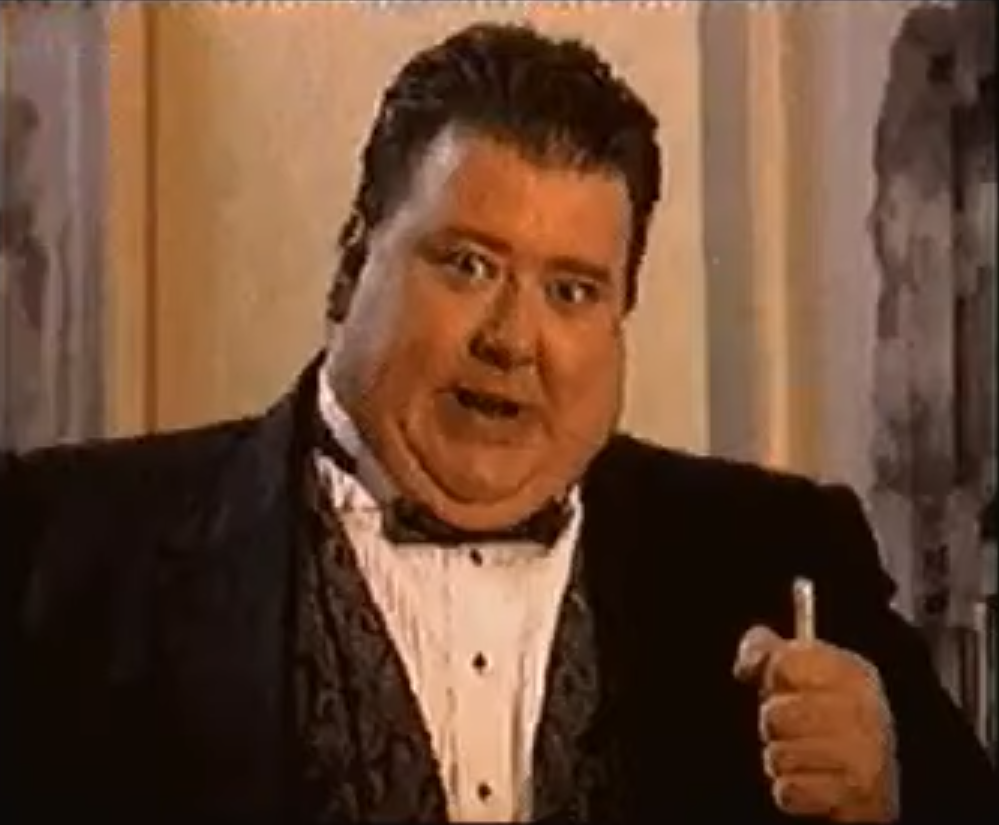


I was appalled, reading through these:
1879:
https://web.archive.org/web/20170314015912/https://books.google.com/books?id=f4I9AQAAIAAJ&pg=PA36#v=onepage&q=&f=false
1965:
https://en.wikipedia.org/wiki/Aspartame#History
1967:
https://en.wikipedia.org/wiki/Acesulfame_potassium#Discovery
1975:
https://en.wikipedia.org/wiki/Sucralose